
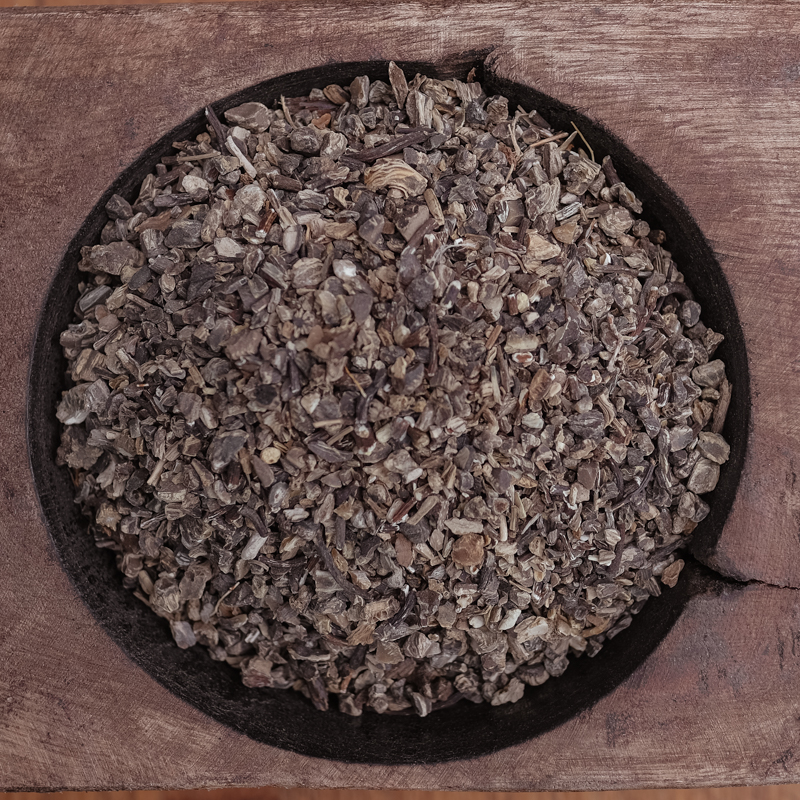
Black Cohosh
Black Cohosh Root — Actaea racemosa
Also known as: Black Snakeroot, Bugbane, Macrotys, Rheumatism Weed
Black cohosh, Actaea racemosa, is a native North American medicinal root and Appalachian woodland herb whose story travels from Indigenous plant traditions through American folk and Eclectic herbalism into modern European phytotherapy. Cherokee records describe the root for rheumatism, coughs, colds and menstruation, while other Eastern Indigenous nations preserved their own uses. By the nineteenth century, American Eclectic physicians knew it as Macrotys, preparing the root for rheumatic and muscular complaints, menstrual concerns, neuralgic pain and spasm. Its old name “rheumatism weed” hints at this much broader history before black cohosh became known primarily as a menopause herb.
The dried root and rhizome were traditionally prepared as decoctions, tinctures and extracts. Today, EMA/HMPC and ESCOP recognize specific black cohosh preparations for menopausal complaints, while its older association with muscular and rheumatic discomfort remains part of its herbal history. A little woodland lore survives in its names: bugbane recalls an old association with insects, and its tall white flowers are sometimes called “fairy candles.” Black cohosh is also listed as At-Risk by United Plant Savers, making responsible sourcing especially import. 4 oz. – $13.25
Sources & Resources
European Medicines Agency / HMPC — Cimicifugae rhizoma (Black – ESCOP — Cimicifugae rhizoma / Black Cohoshhttps://www.escop.com/downloads/black-cohosh/– Cohosh)
https://www.ema.europa.eu/en/medicines/herbal/cimicifugae-rhizoma -King’s American Dispensatory (1898) — historical American Eclectic medicine
https://www.henriettes-herb.com/eclectic/kings/ -United Plant Savers — At-Risk Medicinal Plants –https://unitedplantsavers.org/species-at-risk-list/ – Ethnobotanical review of Native North American uses of Actaea racemosa https://pmc.ncbi.nlm.nih.gov/articles/PMC11409576/
$13.25