
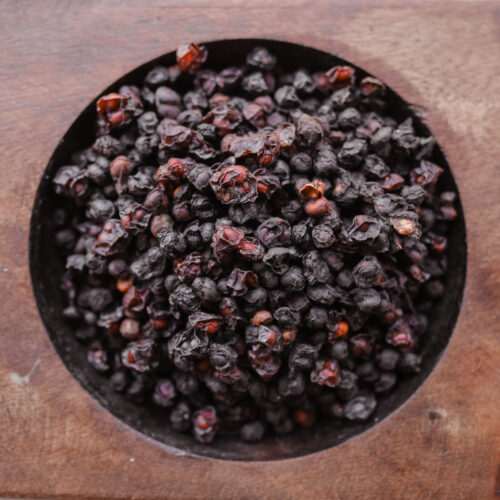
Schisandra Berries Organic
Schisandra Berries: Five-Flavor Tradition, History & Uses
Schisandra berries, Schisandra chinensis – Chinese herbal tradition, the fruit is called wu wei zi, or “five-flavor fruit,” because its unusual taste holds sour, sweet, bitter, salty, and pungent notes.
Traditional Chinese formulas have included schisandra for vitality, coughs, thirst, excessive sweating, digestive complaints, and restless sleep. Farther north, Nanai hunters of the Russian Far East carried the berries during long hunts to help withstand hunger, thirst, and exhaustion. Soviet researchers later studied schisandra extensively and helped introduce it to modern Western herbalism as an adaptogenic tonic.
Dried schisandra berries have a strong tart flavor and can be steeped or gently simmered as tea, prepared as a tincture, syrup, honey paste, herbal elixir, or infused into fruit juice or wine.
In Korea, where the berry is known as omija, it is traditionally made into tea, syrup, and cooling fruit punches. Herbalist Rosemary Gladstar suggests adding the berries to tea, soaking them in juice or wine, or cooking them with honey until soft and jam-like
Know your herbs – Caution: Schisandra may affect how certain prescription medicines are metabolized. Medication note: Schisandra may alter the way certain prescription medicines are absorbed or metabolized, including some cancer, heart, transplant, and blood-thinning medications. Consult your pharmacist or healthcare practitioner before use if you take prescriptions medicine. 4 oz. – $24.25
Resources
Royal Botanic Gardens, Kew. Plants of the World Online: Schisandra chinensis. -American Botanical Council. “Schisandra” herb profile, including Nanai hunting traditions and Russian research. -Panossian, Alexander, and Georg Wikman. “Pharmacology of Schisandra chinensis: An Overview of Russian Research and Uses in Medicine.” Journal of Ethnopharmacology, 2008. Memorial Sloan Kettering Cancer Center. “Schisandra,” including traditional Chinese uses and the meaning of wu wei zi – Yang, Hye Jeong, et al. Research on traditional Korean omija beverages. Journal of Ethnic Foods, 2025. – University of Wisconsin. “Magnolia Vine—Five Flavor Fruit,” including U.S. cultivation and winter hardiness.
$24.25